Key Takeaways:
- How calibration gas affects LEL sensor readings and why two monitors can produce different results in the same combustible atmosphere.
- What correlation factors are, how they influence combustible gas readings, and when they can be useful for interpreting LEL sensor response.
- How to choose the right calibration gas for your application based on the combustible gases workers may encounter.
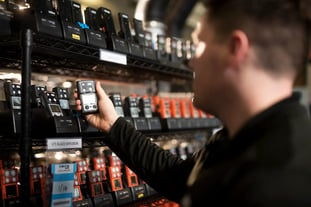 When a combustible gas monitor behaves unexpectedly, the monitor is often the first thing blamed. Maybe it's alarming sooner than another instrument. Maybe two monitors are displaying different readings in the same environment. Maybe a monitor isn't responding the way someone expected after years of using a different brand. Whatever the situation, the conclusion is often the same: something must be wrong with the instrument.
In our experience, that's rarely where the story begins.
After years of working with customers across industries, our application engineering and field services teams have found that many of these situations can be traced back to a much earlier decision that often goes unnoticed: the calibration gas used to calibrate the LEL sensor.
For many organizations, that decision doesn't feel particularly significant. The monitor is ordered, a bottle of calibration gas arrives with it, calibration is performed, and the instrument is put into service. Once that's done, the expectation is straightforward. If combustible gas is present, the monitor should detect it and display an accurate reading.
The reality is more nuanced than that.
A catalytic bead LEL sensor is designed to detect a wide range of combustible gases, but those gases don't all behave the same way inside the sensor. The calibration gas establishes the reference point for how the sensor interprets combustible atmospheres, which means the gas selected during LEL sensor calibration influences every reading that follows. That's why two monitors can behave differently in the same environment without either one being defective.
It's also why choosing a calibration gas isn't simply another maintenance task. It's one of the first decisions made in a combustible gas detection program, and one that has a direct impact on the information workers rely on every day.
The Industry Doesn't Have a Calibration Gas Problem. It Has an Application Problem.
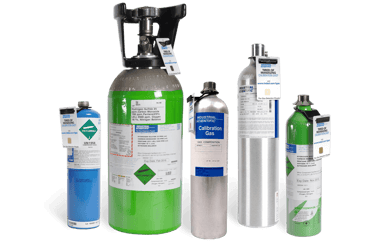 One of the more interesting things we've learned over the years is that very few customers intentionally choose the wrong calibration gas. In fact, many don't realize there's much of a decision to make at all.
That's understandable. Portable gas detectors have become easier to purchase than ever before. A safety manager selects a monitor, a distributor includes a bottle of calibration gas, and the equipment arrives ready to be commissioned. The process feels complete, so there isn't much reason to question it.
The problem is that combustible gas detection doesn't begin with the monitor. It begins with understanding the hazards the monitor is expected to detect.
That's the conversation our application engineers try to have first.
Rather than asking customers what calibration gas they want to order, they start with a different question: What combustible gases are actually present in your application?
The answer is what determines everything that comes next.
A wastewater treatment facility dealing primarily with methane presents a very different monitoring challenge than a refinery processing multiple hydrocarbon vapors. A landfill, natural gas utility, battery charging room, paint manufacturing facility, fuel terminal, or chemical processing plant each introduces its own combustible hazards. Treating every one of those environments the same simply because they all require an LEL sensor overlooks one of the most important variables in combustible gas detection.
Too often, gas monitors are purchased like commodities. The discussion centers on sensor configuration, pricing, or delivery timelines, while the application itself receives far less attention. By the time someone begins questioning the monitor's performance, the decision that shaped those readings may have been made months or even years earlier.
Why Two Correct Monitors Can Produce Different Readings
This misunderstanding often occurs when customers compare monitors from different manufacturers.
Our application engineers regularly receive calls from organizations convinced that one monitor must be malfunctioning because it displays a different reading than another instrument in the same area. Sometimes the assumption is that one monitor is producing false alarms. Other times, the concern is that one isn't responding quickly enough.
What those investigations frequently uncover is that both monitors are operating exactly as designed.
The difference isn't the monitor. It's the calibration gas.
If two LEL sensors have been calibrated using different calibration gases, they aren't necessarily interpreting combustible atmospheres from the same reference point. Comparing the readings without understanding that difference is much like comparing measurements taken with two different scales that were calibrated using different standards. The numbers may differ, but that doesn't mean either instrument is inaccurate.
We've seen organizations spend valuable time troubleshooting equipment, requesting service, or questioning the reliability of a monitor when the real issue was simply that they weren't making an apples-to-apples comparison.
Understanding whether you are making that comparison starts with a few questions:
- What gas are your LEL sensors calibrated to?
- What combustible gases could workers actually encounter?
- And how does the sensor respond when those gases aren't the same?
The answer to that last question comes down to correlation factors.
Understanding Correlation Factors
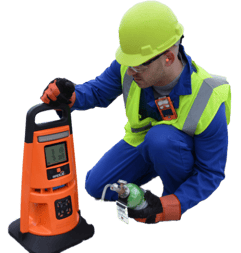 The name may sound complicated, but the principle is relatively straightforward.
Catalytic bead LEL sensors respond differently to different combustible gases. Calibration establishes a reference point using a known gas, but when the gas in the atmosphere differs from the calibration gas, the displayed reading may not represent the actual concentration as closely.
That's where correlation factors come in. A correlation factor is a multiplier that can be applied to an instrument reading to provide a better estimate of when the target gas is known but differs from the gas used to calibrate the sensor.
Consider an instrument calibrated to methane that encounters propane. The correlation factor for propane relative to methane is 1.62. If the instrument displays 10% LEL, applying that factor gives you:
10% LEL × 1.62 = 16.2% LEL propane
That means an instrument calibrated to methane could display 10% LEL when the estimated propane concentration is actually 16.2% LEL. By comparison, an instrument calibrated to pentane would read approximately 8% LEL in that same propane atmosphere.
Neither reading means the instrument is malfunctioning. Each sensor is responding based on the reference established by its calibration gas. The difference illustrates why calibration gas matters: the same combustible atmosphere can produce different displayed readings depending on how the sensor was calibrated.
Correlation factors become more difficult to rely on when multiple combustible gases may be present. Applying a factor assumes you know which gas the sensor is detecting. In a mixed atmosphere, each combustible has a different response and its own correlation factor, so applying a single multiplier can't necessarily tell you the total combustible content present.
Correlation factors can provide a useful estimate when direct calibration to the target gas isn't practical, but they aren't a substitute for choosing a calibration strategy that reflects the application. The better you understand the combustible hazards workers may encounter, the better you can select a calibration gas that provides meaningful information when it matters.
This LEL gas chart outlines correlation factors for combustible gas sensors.
There Isn't a Universal Calibration Gas
 This naturally leads to one of the most common questions our application engineers receive.
If calibration gas matters so much, which one should organizations use?
The answer isn't as simple as choosing methane or pentane. It starts with understanding the application.
Industrial Scientific often recommends pentane calibration gas for general industrial environments because many facilities are exposed to a variety of hydrocarbon vapors rather than a single combustible gas. In those situations, pentane provides a more conservative response across many common combustible gases, helping organizations detect potential hazards earlier.
That doesn't make pentane the right answer for every facility.
Applications where methane is the known combustible hazard—including mining, wastewater treatment, landfills, biogas operations, natural gas utilities, and many underground infrastructure environments—are often better served by methane calibration gas. In some industries, methane calibration is also required by regulation.
That's why we avoid one-size-fits-all recommendations. The goal isn't to sell a particular calibration gas. The goal is to ensure the LEL sensor is calibrated for the hazards workers are actually expected to encounter.
Small Decisions Can Have Significant Consequences
One of the themes that consistently emerges during customer conversations is that calibration gas issues rarely announce themselves immediately.
Organizations may operate for years without realizing their calibration practices don't align with their application. The problem often isn't discovered until two monitors display different readings, someone questions whether an instrument is functioning correctly, or an incident prompts a closer review of the gas detection program.
Just as importantly, calibration gas isn't the only factor that influences LEL sensor performance. Catalytic bead sensors can also be affected by poisons and inhibitors, including certain silicone-based compounds, sulfur compounds, chlorine, and other chemicals commonly found in industrial environments. Regular bump testing and calibration remain essential because they help identify these issues before workers rely on the instrument in the field.
These situations reinforce a broader point: the effectiveness of a gas detection program isn't determined solely by the quality of the monitor. It's influenced by every decision surrounding how that monitor is selected, configured, maintained, and ultimately used.
Looking Beyond the Monitor
The conversation around combustible gas detection has evolved considerably over the past decade. Organizations are investing more in connected safety technologies, data visibility, and proactive risk management than ever before. Those advancements are important, but they don't replace the fundamentals.
Choosing the right calibration gas for an LEL sensor remains one of those fundamentals.
It's easy to view calibration as another maintenance requirement or another box to check before a monitor goes into service. In reality, it establishes the foundation for every combustible gas reading that follows.
That's why the most valuable question isn't, "Which calibration gas should I buy?"
It's, "What hazards am I asking this monitor to detect?"
Once that question is answered, selecting the appropriate calibration gas becomes much more than a technical decision. It becomes part of building a gas detection program that reflects the realities of the workplace and gives workers greater confidence in the information they're relying on every day.
To learn more about Industrial Scientific's products and services, talk to an expert.