Key Takeaways:
- Modern gas detection programs combine personal gas monitors, area monitors, and connected safety software to improve visibility and worker protection.
- Connected gas detection solutions like Ventis Pro5, Radius BZ1, and iNet Insights help organizations strengthen reliability, usability, and safety program performance.
- Real-time visibility, automated reporting, and actionable safety data are helping industrial organizations move from reactive safety practices to proactive risk management.
 Gas detection has always played a critical role in protecting workers from invisible hazards. In industries where toxic or combustible gases are part of the job, a monitor is often the first and only line of defense. But today, the conversation around gas detection is evolving. Conversations that used to be about where the device was clipped have transformed into how that device fits into a broader, connected safety strategy that supports faster decisions, clearer communications, and more proactive risk management.
Across industrial environments, new innovations are reshaping how organizations think about gas detection. These advancements represent both technical upgrades as well as a shift in how safety programs are designed, implemented, and sustained.
Gas Detection for Real-World Reliability
One of the most important developments in gas detection is a renewed focus on reliability in real-world conditions. While accuracy has always been a baseline requirement, today’s innovations go further by addressing how devices perform over time and under stress.
Modern instruments like the Ventis® Pro5 and Radius® BZ1 are being engineered to reduce common points of failure. This includes more durable sensor designs—such as the MPS™ LEL Sensor addition for the Radius BZ1—improved resistance to environmental conditions like humidity or contaminants, and longer operational lifespans. Technologies such as advanced sensor architectures and poison-resistant detection methods are helping ensure that monitors continue to function even in harsh or unpredictable environments.
At the same time, extended runtimes are becoming a key priority. Workers in industries like oil and gas, utilities, and manufacturing often operate in environments where frequent charging or maintenance is not practical. Newer devices are designed to last longer between charges and require less maintenance, helping reduce downtime and ensuring that protection is always available when needed.
Reliability, in this context, is more than the device. It’s also about confidence, and workers need to trust that their monitor will alert them when it matters most, without hesitation or failure.
Simplifying the User Experience
Another major area of innovation is usability. Historically, gas detectors have sometimes been seen as complex or cumbersome, which can create friction for workers in the field. Today’s designs are shifting toward simplicity, with a focus on making devices intuitive and easy to use.
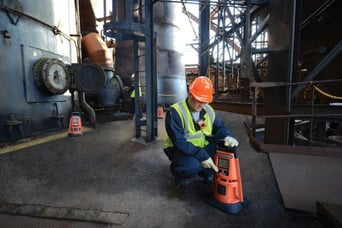
.jpg?width=355&height=171&name=calibration%20bump%20testing%20540%20260%20(1).jpg) This includes streamlined interfaces, clearer alarm signals, and faster setup processes. Devices are increasingly designed to minimize the steps required for everyday use, such as bump testing or calibration. In some cases, these processes can now be completed in a fraction of the time they once required through automated workflows and docking solutions connected to platforms like iNet Insights.
This includes streamlined interfaces, clearer alarm signals, and faster setup processes. Devices are increasingly designed to minimize the steps required for everyday use, such as bump testing or calibration. In some cases, these processes can now be completed in a fraction of the time they once required through automated workflows and docking solutions connected to platforms like iNet Insights.
Ergonomics also play a role. Lighter, more wearable designs help ensure that monitors can be comfortably integrated into a worker’s routine without interfering with their tasks. The goal is to remove barriers to consistent use, so that wearing a gas detector becomes second nature rather than an inconvenience.
When devices are intuitive and easy to use, workers are more likely to use them correctly and consistently. This, in turn, strengthens the overall effectiveness of a safety program.
Moving Beyond Alarms to Actionable Insight
Perhaps the most significant shift in gas detection is the growing emphasis on data. Traditionally, gas monitors have been used primarily as alerting devices. They notify workers when a hazard is present, prompting immediate action. While this remains essential, organizations are now looking beyond real-time alerts to understand what that data can reveal over time.
Modern gas detection solutions are increasingly capable of capturing and transmitting exposure data, alarm events, and device status information. Connected safety platforms like iNet Insights help aggregate and analyze this information, providing valuable insight into patterns and trends that might otherwise go unnoticed.
For example, repeated low-level exposures in a specific area could indicate a developing issue that warrants further investigation. Frequent alarms during certain tasks may highlight the need for process changes or additional controls. By turning data into insight, organizations can move from reactive responses to more proactive safety management.
This shift also supports better documentation and reporting. Automated data collection reduces the burden of manual recordkeeping and helps ensure that information is accurate, consistent, and readily available when needed.
Right-Sized Connectivity for the Job
Connectivity is a key enabler of these data-driven capabilities, but the approach to it is becoming more nuanced. Rather than treating connectivity as a one-size-fits-all solution, organizations are recognizing the importance of matching connectivity options to specific environments and risk profiles.
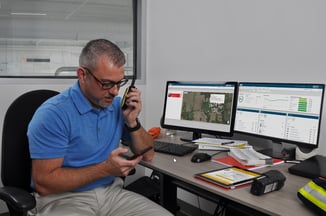 In some settings, real-time connectivity is essential. Live monitoring through connected gas detection solutions can provide immediate visibility into worker status and environmental conditions, enabling faster responses in emergency situations. This is particularly valuable for confined space entry, remote operations, or high-risk tasks where conditions can change rapidly. Area monitors like the Radius BZ1 can also help provide broader visibility across a worksite by being used in fenceline and perimeter monitoring applications.
In other environments, continuous connectivity may not be feasible or necessary. Limited infrastructure, remote locations, or cost considerations may require a different approach. In these cases, gas detectors that can store and later transmit data still provide meaningful value, supporting analysis and continuous improvement without relying on constant connectivity.
The key is flexibility. By offering multiple connectivity options through programs like iNet, modern gas detection programs can be tailored to the realities of each worksite, ensuring that technology supports the work rather than complicating it.
Bridging the Gap Between Compliance and Practice
Despite these advancements, one of the most common challenges organizations face is not the technology itself, but how it is implemented. Many safety professionals are asking how to make gas detection truly effective in day-to-day operations rather than simply meeting compliance requirements.
 This is where the concept of connected safety becomes especially important. A strong gas detection program is not defined solely by the devices being used. It is defined by how those devices are integrated into workflows, policies, and decision-making processes.
Effective programs start by selecting the right tools for the environment and hazards at hand. This includes considering factors such as the types of gases present, the conditions in which work is performed, and the level of risk involved.
From there, training and expectations play a critical role. Workers need to understand not only how to use devices like the Ventis Pro5, but also how to interpret alarms and respond appropriately. Employers, in turn, need to establish clear processes for reviewing data, investigating incidents, and reinforcing safe behaviors through connected safety programs.
When these elements are aligned, gas detection becomes a trusted part of how work is done safely.
Building Trust Through Consistency
At its core, the evolution of gas detection is about trust. Workers rely on their gas monitors to keep them safe in environments where hazards cannot be seen, smelled, or otherwise detected. That trust is built through consistent performance, clear communication, and reliable data.
Innovations in sensor technology, device design, and connectivity all contribute to this goal. But they must be supported by strong implementation and ongoing reinforcement. Even the most advanced gas detector cannot protect a worker if it is not used correctly or consistently.
Organizations that succeed in this space are those that view gas detection as an integral part of their safety culture. They prioritize reliability and simplicity, invest in training and support, and use connected safety data to continuously improve their programs.
The Future of Gas Detection
Looking ahead, the trajectory of gas detection is clear. Gas monitors and area monitors will continue to become more reliable, more user-friendly, and more connected. Data will play an increasingly central role in shaping safety strategies, enabling organizations to anticipate risks instead of reacting to them.
At the same time, the importance of thoughtful implementation will only grow. As connected safety technology becomes more advanced, the need to align it with real-world workflows and human behavior becomes even more critical.
Gas detection is no longer solely about identifying hazards. It is about creating a connected safety ecosystem where information flows seamlessly, decisions are informed by real data, and workers are empowered to act quickly and confidently. In this new era, innovation is not defined by a single feature or capability. It is defined by how all the pieces come together to create a safer, more responsive, and more resilient workplace.
Watch the on-demand version of The Real Reasons Gas Detection Programs Fail and How to Fix Them to hear experts from Industrial Scientific break down real-world failure modes, lessons learned, and practical ways to strengthen your gas detection program.