Work sites have many hazards you need to look out for – but unmaintained gas monitors don’t need to be one of them. Make sure your gas monitors are working with routine maintenance tasks like bump tests and calibrations. Here, we’ll give an overview of when, why, and how to perform these two key processes, so you can trust that your gas monitor will alert you to invisible hazards.
Calibration
To ensure your gas monitor can accurately detect gas levels, you must first calibrate it. Calibrating the monitor means exposing it to a known concentration of calibration gas or test gas for a specific amount of time. This reading becomes the gas monitor’s reference point for future readings. Repeat this process each month to ensure accurate readings. Remember, you need to calibrate your gas monitor regularly because sensors can drift over time and poisons and inhibitors can affect gas readings.
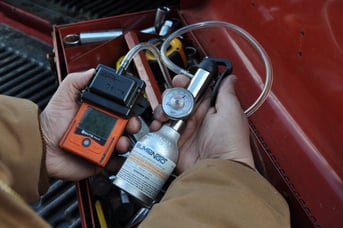
You can calibrate your gas monitor manually with calibration gas and some tubing or you can use a docking station to automatically calibrate your monitor on a set schedule. Calibrating your gas monitor with a docking station also allows you to access past calibration records and easily generate calibration certificates for compliance purposes.
Using incorrect or expired calibration gas can lead to an improper calibration, meaning your gas monitor won’t display accurate readings. This simple mistake can have life-altering consequences, so it’s important to always check the contents and expiration date of your calibration gas bottles. Once a bottle is expired, you should not use it because chemical reactions can take place inside the container and alter the contents.
Bump Testing
Bump tests, also known as functional tests, protect you on the job by checking that your gas monitor will alert you to harmful levels of gas. When bump testing, the sensors in your gas monitor are briefly exposed to a concentration of gas that is higher than the alarm set points. This test verifies that the sensors on your gas monitor will respond and an alarm will go off as expected. It’s important to note that the bump test does not check the accuracy of the gas reading. It checks that the sensors and alarms are working. The only way to know that your gas monitor works is by bump testing it before each shift.
.jpg?width=255&name=Calibration%20and%20Bump%20Testing%20(255x180).jpg)
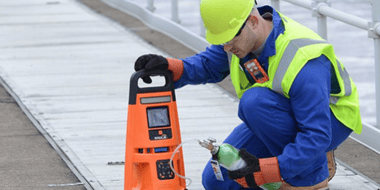
The easiest way to bump test your monitor is with a docking station. The docking station can automatically bump test your gas monitor on a set schedule before each shift. This eliminates the time and hassle of manually bump testing your monitor. If a docking station is not available, you can also bump test manually with calibration gas. Whichever method you choose, commit to doing it every day.
Safety in Calibration and Bump Testing
Performing routine maintenance on your gas monitor ensures that the device is ready to use. If you don’t maintain your gas monitor, you risk exposure to dangerous gas hazards, possibly leading to significant injuries or fatalities.
It’s important to maintain your gas monitor so you know that it will protect you as expected. You have a particular skillset that allows you to perform your job—make sure to maintain your gas monitor so it can do its job, too.